
The Beauties of Lucknow
- Hamdan Tariq

- Apr 21
- 3 min read
“Lucknow’s performers were made to stand for an entire culture”
In 1874, a photographer named ʿAbbās ʿAlī published The Beauties of Lucknow: an album of female performers, singers, dancers, and theatrical figures tied to the culture of Lucknow. But this was never just about beauty. It was also about memory, performance, and the survival of a courtly world after its political destruction at the hands of the British.

The album appeared nearly two decades after the British annexation of Awadh in 1856. Scholars argue that it looks backward, almost like an elegy for the vanished court of Wajid Ali Shah. These photographs were preserving a world that had already been broken apart.
The women in the album are described as singers, dancers, and actresses of Lucknow and the old Oudh court. ʿAbbās ʿAlī framed them not as scandalous figures, but as carriers of refinement, performance, and prestige. In a colonial moment that often tried to degrade such women, the album instead gave them dignity and historical weight.

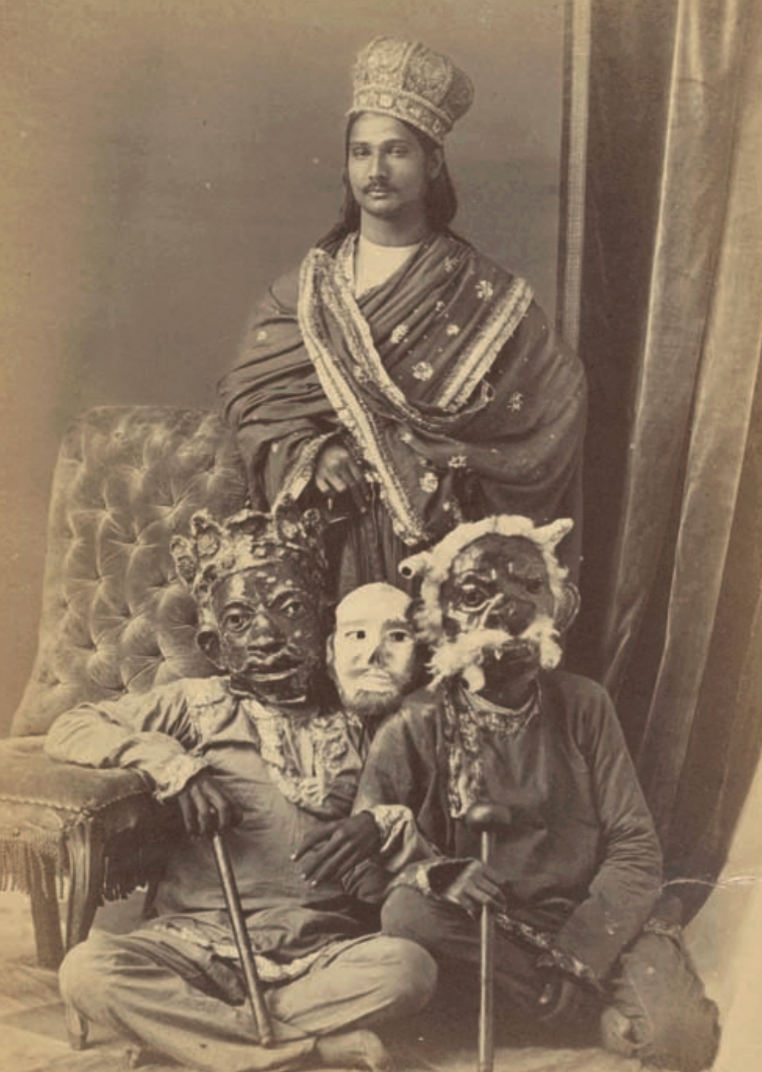
Four of the images are not just portraits of performers. They are costumed actors from Indar Sabhā, one of the most famous works of Urdu musical theatre. That makes this album one of the earliest visual records of a performance tradition that traveled from Lucknow into Bombay, Parsi theatre, and far beyond. Inder Sabha is an Urdu play and opera written by Agha Hasan Amanat, and first staged in 1853. It is regarded as the first complete Urdu stage play ever written.

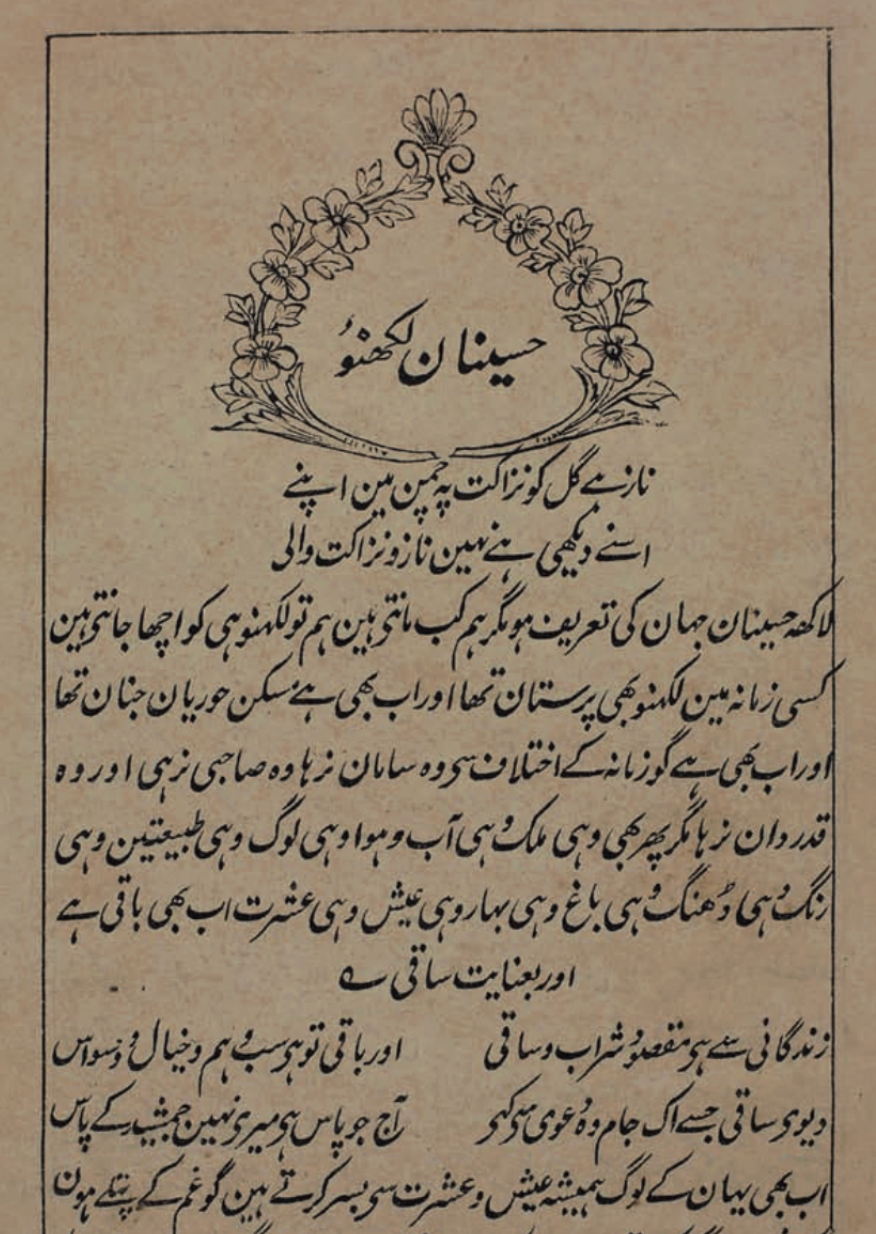
The Urdu introduction does something beautiful: it describes Lucknow not as a ruined city, but as a paristān: a land of fairies, elegance, fragrance, leisure, and dangerous beauty. Even after catastrophe, the text insists that Lucknow still shimmered. The album was not only documenting people. It was rebuilding an atmosphere almost ruined to imperial influences.
The introduction also implies an extraordinary concept, drawing parallels between seeing a photograph and meeting the person. It uses the word mulāqāt. In other words, a photo was not treated as a flat record. It was a reunion across absence, distance, and loss in a time when so many cultural influences were fading.

The photograph of Raja Indar is the strangest in the album. He appears with two demonic attendants, and between them is a puppet-like white man with a damaged face. The article suggests this may comic anti-European performance, or even a subtle gesture of loyalty to the fallen court against the British Raj.
We extend our heartfelt thanks to Professor Kathryn Hansen from the University of Texas at Austin for helpful scholarship of such depth, clarity, and care, and for helping make sense for us this photographic archive through which Lucknow’s worlds of performance, beauty, and remembrance continue to speak.
References:
Darogha Ubbas Alli, The Lucknow Album (Calcutta: G. H. Rouse, Baptist Mission Press, 1874).
Darogah Haji Abbas Ali, An Illustrated Historical Album of the Rajas and Taaluqdars of Oudh (Allahabad: North-Western Provinces and Oudh Government Press, 1880).
[ʿAbbās ʿAlī], The Beauties of Lucknow (Calcutta: Calcutta Central Press Company, 1874). Discussed and analyzed in later scholarship.
Kathryn Hansen, “The Beauties of Lucknow: An Urdu Photographic Album,” Journal of Urdu Studies 1 (2020): 141–176.
Published For © Kosh-E-Lughat 2026


Comments